
Searching “CPCT typing test online free” usually means one thing: you’ve read about the exam pattern already, and now you want to actually feel what 15 minutes of timed typing under that scoring system is like, without paying for software or waiting for an official mock slot.
You can practice the format for free. The trick is practicing the right format, since a generic one-minute typing test online won’t tell you much about how you’ll do on a 15-minute government exam scored on net speed.
What a useful free practice session actually mirrors
CPCT’s typing section runs as two separate 15-minute blocks, one in English and one in Hindi, and each one is scored on Net WPM rather than however fast your fingers moved. A free practice test that just gives you a 60-second burst and a raw WPM number is testing something different from what CPCT tests. It’s not useless, but it won’t tell you if you can sustain accuracy for the full quarter hour, which is where most candidates actually lose points.
If you’re serious about matching exam conditions with free tools, look for three things: a timer set close to 15 minutes rather than 1 or 3, a Net WPM or accuracy-adjusted score rather than only raw speed, and the option to type continuously through a full passage rather than short disconnected phrases.
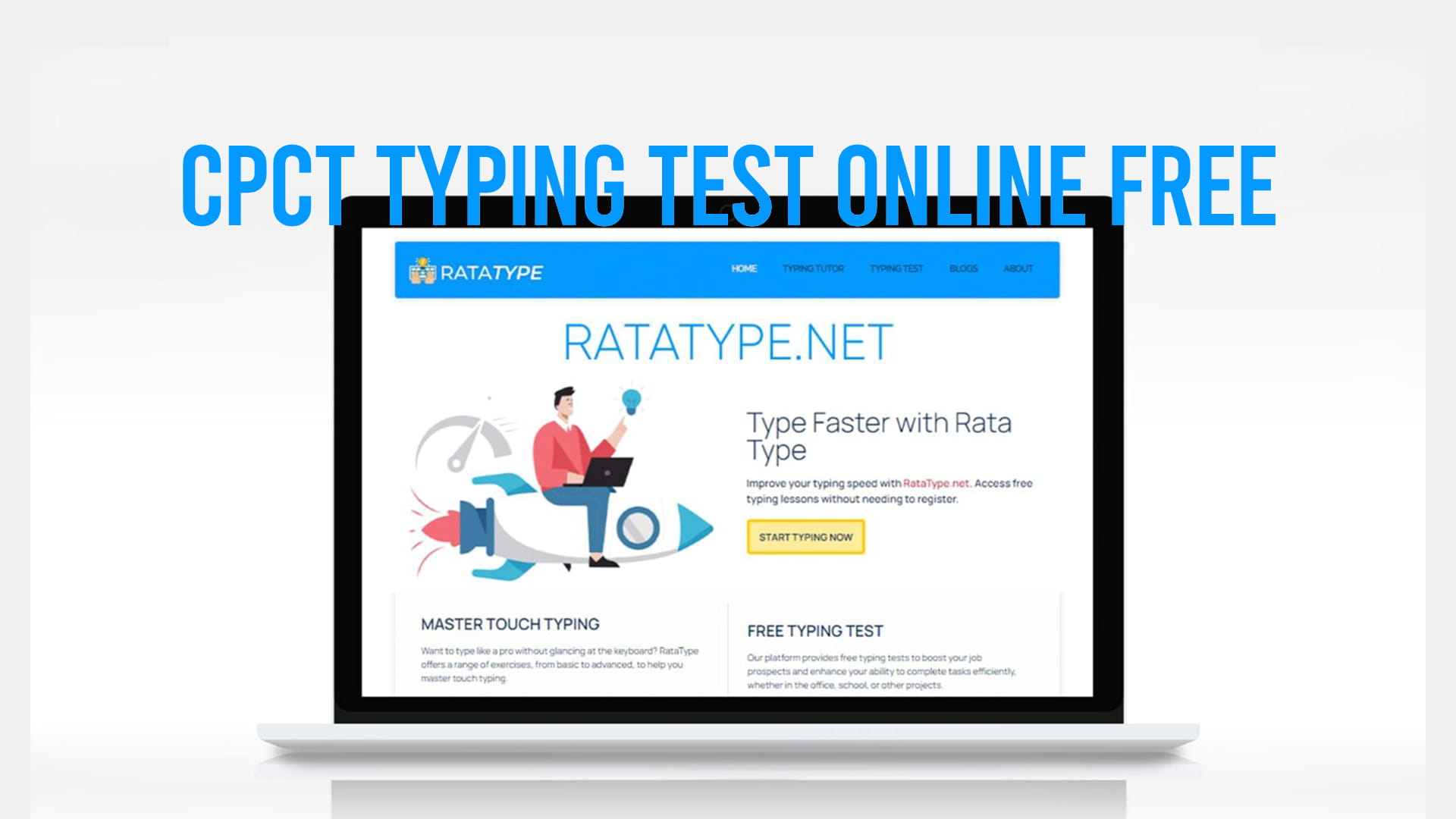
Ratatype’s free, no-registration typing speed test lets you set a longer duration and see both your raw and corrected numbers side by side, which is the closer analog to how CPCT will actually score you, even though it isn’t a CPCT-branded mock exam.
Practicing English and Hindi separately, and why that matters more here
CPCT clears English and Hindi independently. A strong English block does nothing for you if the Hindi block falls short, and mixing the two into one undifferentiated practice routine is the single most common mistake candidates make.
Free practice time is better spent as two distinct sessions than one combined one. Run a full English block, note your net score, then run a separate Hindi block in whichever layout you’ll actually test in, Remington Gail or Inscript. Treat them as two different exams you happen to be sitting on the same day, because that’s functionally what CPCT does.
If Hindi is the weaker of your two languages, that’s where free daily practice pays off fastest, since a modest gain in your weaker language usually moves your overall qualifying status more than the same gain in your stronger one.
Building toward Net WPM, not just gross speed
CPCT applies an accuracy penalty to your raw typing speed to arrive at the number that actually counts. A fast run riddled with mistakes will score below a slower, cleaner one, and this is exactly the part that a casual, ungraded practice session hides from you. If you’ve only ever seen your gross WPM on a free test, it’s worth understanding how gross and net WPM are actually calculated before you assume the number on your screen will match what shows up on your CPCT scorecard.
Practically, that means slowing down slightly in early practice sessions until your accuracy sits comfortably above the exam’s threshold, then building speed back up from a clean baseline rather than chasing a fast number first and cleaning up mistakes later.
A realistic free practice routine
Run one full 15-minute English block and one full 15-minute Hindi block, on separate days if that’s easier to fit in, and log your net score each time rather than just your gross speed.
Practice Hindi in the exact layout, Remington Gail or Inscript, that your test center will use. Switching layouts cold on exam day costs real accuracy, and that’s not a risk worth taking for the sake of convenience during practice.
Once you’re consistently clearing the exam’s minimum in both languages with room to spare, shift toward full-length timed runs that simulate exam day directly rather than shorter daily drills, since sustaining focus and accuracy across the entire 15 minutes is its own separate skill from short-burst speed.
If your target job also lists a general government typing requirement rather than CPCT specifically, the practice largely transfers. It’s worth glancing at what typing tests for government exams generally expect across different states and bodies, so you’re not over-specializing your prep for one exam alone.
For the exam pattern itself, eligibility, and the full breakdown of CPCT’s scoring bands, the complete CPCT typing test guide covers that ground in depth. This post is about the free practice side specifically, so pair the two if you’re starting from zero.
Common questions
Is there a genuinely free way to practice for CPCT? Yes. Free typing test tools that let you set a longer duration and show net rather than raw speed get you most of the way there, even without being an official CPCT-branded mock.
Do I need to pay for a CPCT-specific mock test? Not strictly. The underlying skill, sustained accuracy over 15 minutes in two languages, transfers from general free practice as long as you’re tracking the right numbers.
How often should I practice before the real exam? Short daily sessions in the weeks leading up to it, moving to full 15-minute timed runs in the final week or two so exam-day endurance isn’t a surprise.
Should I practice English and Hindi on the same day? Either works, but track them as separate scores. Don’t let a good English result mask a weak Hindi one, since CPCT won’t let you average them together.
Ratatype.net offers free typing lessons and timed tests with no registration required, so you can build both your English and Hindi speed toward CPCT’s actual format without signing up for anything or paying for software first.