
Typing has become an essential skill that everyone needs to master. Whether you’re a student working on assignments, a professional crafting emails, or a content creator developing articles, your typing speed and accuracy can significantly impact your productivity. This is where typing games come into play, transforming what could be a mundane learning process into an engaging and enjoyable experience. Among the various typing practice methods available, keyboard jump games have emerged as one of the most entertaining and effective ways to improve your typing skills while having fun.
Typing games are interactive applications designed to help users improve their keyboard skills through gameplay mechanics. Unlike traditional typing tutors that focus solely on drills and exercises, these games incorporate elements of entertainment, competition, and achievement that keep users motivated and engaged. The keyboard jump game concept takes this a step further by adding dynamic movement and challenges that require quick reflexes and accurate typing simultaneously.
The beauty of online typing games lies in their accessibility. You don’t need to download software or pay for expensive programs. With just an internet connection and a web browser, you can start practicing immediately. This convenience has made typing games increasingly popular among people of all ages, from children just learning to type to adults looking to enhance their professional skills.
Understanding the Mechanics of Keyboard Jump Games
Keyboard jump games operate on a simple yet effective principle: you control a character or object on the screen by typing specific letters, words, or key combinations. As you type correctly, your character moves, jumps, or performs actions that help you progress through the game. The challenge increases as you advance, with faster-moving obstacles, longer words, or more complex key combinations required to succeed.
This gameplay mechanic directly links your typing ability to your success in the game. When you type quickly and accurately, you perform better, achieve higher scores, and unlock new levels. This immediate feedback loop is incredibly powerful for learning, as it reinforces good typing habits while making mistakes immediately apparent and correctable.
The jumping element adds an extra layer of excitement. Instead of simply typing text that appears on the screen, you’re actively engaged in navigating obstacles, collecting items, or competing against time. This makes the practice feel less like work and more like play, which is crucial for maintaining long-term engagement and consistent practice.
Benefits of Playing Typing Games for Skill Development
Engaging with typing games offers numerous advantages beyond simple entertainment. First and foremost, these games significantly improve your typing speed. Through regular practice in a game environment, your fingers develop muscle memory for key positions, allowing you to type faster without consciously thinking about where each letter is located. Many players report speed increases of twenty to thirty words per minute after just a few weeks of consistent practice.
Accuracy is another critical benefit. Typing games penalize errors, encouraging you to focus on precision rather than just speed. This balance between speed and accuracy is essential for real-world typing tasks, where mistakes can lead to miscommunication or require time-consuming corrections. By practicing in a game environment where errors have immediate consequences, you develop better habits that translate to your everyday typing.
Hand-eye coordination receives a substantial boost from typing games. The need to watch the screen while your fingers move across the keyboard strengthens the connection between what you see and how your hands respond. This improved coordination benefits not only typing but also many other activities that require simultaneous visual processing and manual dexterity.
Concentration and focus naturally improve as well. Typing games demand your full attention, training your mind to maintain focus for extended periods. This enhanced ability to concentrate can positively impact other areas of your life, from studying to working on complex projects.
Why Choose Online Typing Games Over Traditional Methods
Traditional typing courses and software have their place, but online typing games offer distinct advantages that make them superior for many learners. The most obvious benefit is motivation. Games are inherently more engaging than repetitive exercises. When you’re enjoying yourself, you’re more likely to practice regularly, and consistency is the key to improvement.
Online games also provide immediate feedback. You know instantly whether you’ve made a mistake, how fast you’re typing, and how well you’re performing compared to previous attempts. This real-time information helps you adjust your technique on the fly and track your improvement over time.
The competitive element found in many online typing games adds another motivational factor. Whether you’re competing against your own best scores, challenging friends, or comparing yourself to players worldwide through leaderboards, this competition drives you to push your limits and continuously improve.
Flexibility is another significant advantage. Online games can be played whenever you have a few spare minutes, whether during a lunch break, while commuting, or before bed. This accessibility makes it easier to incorporate regular practice into even the busiest schedules.
Features That Make Typing Games Effective Learning Tools
Effective typing games share several key features that maximize learning outcomes. Progressive difficulty is essential. Games should start at a comfortable level and gradually increase in challenge as your skills improve. This prevents frustration for beginners while ensuring advanced users remain engaged and continue developing their abilities.
Variety in gameplay keeps things interesting. The best typing games include multiple modes, levels, or challenges that prevent the experience from becoming repetitive. This variety ensures that you’re practicing different aspects of typing, from individual letters to complete words and sentences.
Visual and audio feedback enhance the learning experience. Colorful graphics, satisfying sound effects, and clear indicators of success or failure make the practice more enjoyable and help reinforce correct behavior. When you type correctly and hear a pleasant sound or see an exciting animation, your brain forms positive associations with accurate typing.
Performance tracking allows you to monitor your progress over time. Being able to see your speed increasing and error rate decreasing provides tangible evidence of improvement, which is incredibly motivating. Many games include detailed statistics showing your performance across different metrics, helping you identify areas where you need more practice.
How Typing Games Adapt to Different Skill Levels
One of the most impressive aspects of modern typing games is their ability to accommodate users at various skill levels. Complete beginners can start with games that focus on home row keys and basic letter recognition. These games use simple mechanics and slow-paced gameplay that allows new typists to build confidence and familiarity with the keyboard layout.
Intermediate users benefit from games that introduce more complex words, require faster typing, and include more challenging gameplay elements. At this level, the games help solidify the muscle memory developed during the beginner stage while pushing users to increase their speed and accuracy.
Advanced typists can find games that truly test their limits with extremely fast-paced action, complicated words, special characters, and number combinations. These advanced games help maintain and refine skills that are already well-developed, preventing stagnation and continuing to push the boundaries of what’s possible.
The adaptive nature of many typing games means they automatically adjust difficulty based on your performance. If you’re consistently succeeding, the game becomes more challenging. If you’re struggling, it may dial back the difficulty to help you build confidence before progressing. This intelligent adaptation ensures optimal learning conditions for every player.
The Role of Free Resources in Learning to Type
Access to quality typing education shouldn’t require significant financial investment. This is where free resources become invaluable. Platforms that offer typing practice without registration barriers or payment requirements democratize skill development, making it available to anyone with internet access.
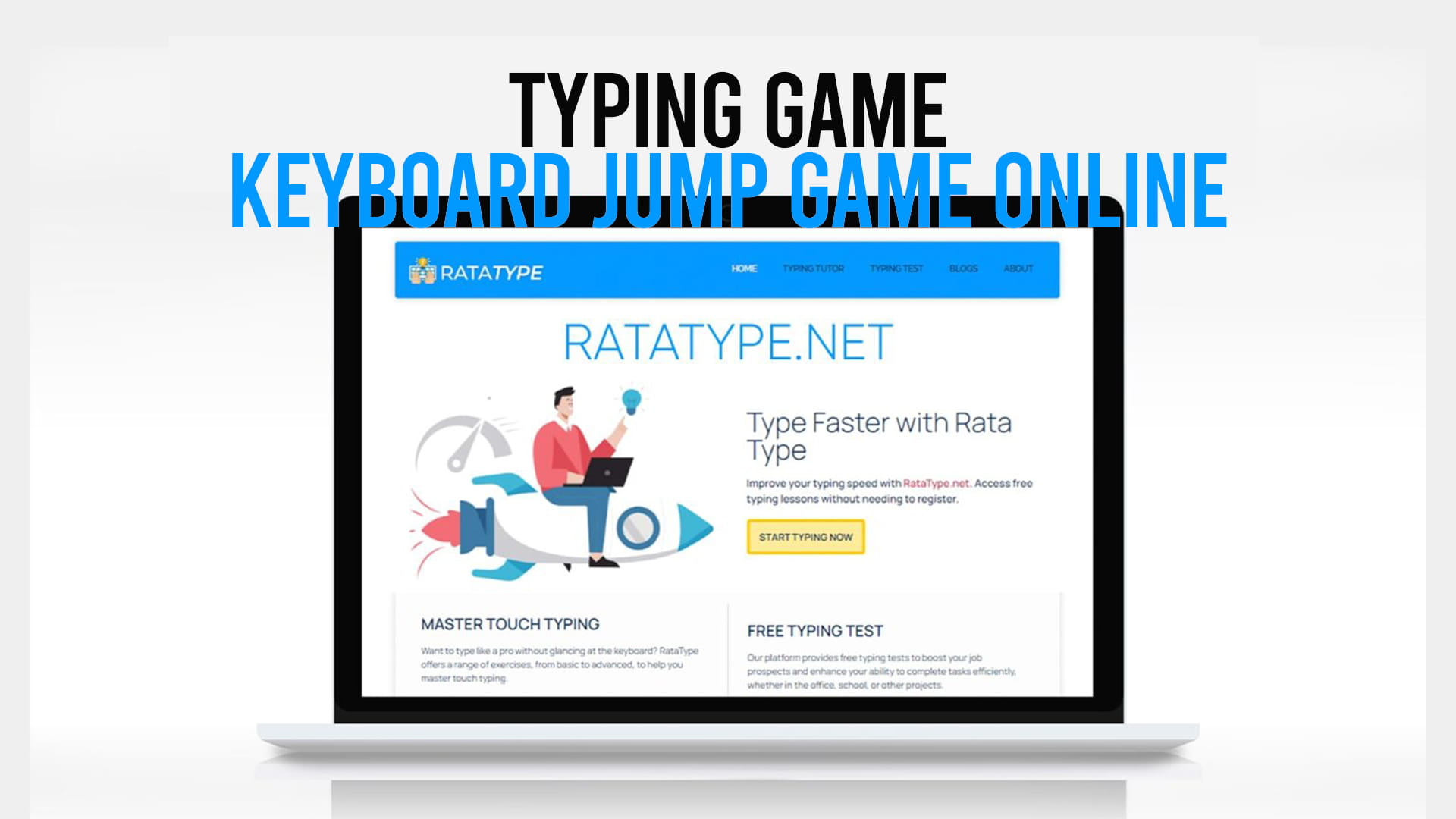
Ratatype stands out as an excellent example of this accessibility. By visiting Ratatype, you can immediately begin practicing your typing skills without creating an account or providing payment information. This removes barriers that might otherwise prevent people from starting their typing improvement journey. The platform offers structured lessons alongside engaging typing games, providing a comprehensive learning experience at no cost.
What makes free resources particularly valuable is their inclusivity. Students without disposable income, professionals looking to enhance their skills, and anyone in between can access the same high-quality tools and instruction. This level playing field ensures that typing proficiency becomes a skill determined by dedication and practice rather than financial resources.
Another remarkable feature offered by some free platforms is certification. Ratatype provides free certificates upon completion of their typing course, giving you tangible proof of your skills without any registration requirements. This certification can be valuable for resumes, job applications, or simply as a personal achievement milestone. The fact that you can earn this recognition without monetary investment makes it accessible to everyone who puts in the effort to improve their typing skills.
Maximizing Your Learning Through Consistent Practice
While typing games make practice enjoyable, consistency remains the most critical factor in skill development. Setting aside dedicated time each day for typing practice yields far better results than sporadic, lengthy sessions. Even fifteen to twenty minutes of daily practice can lead to dramatic improvements over several weeks or months.
Creating a practice routine helps establish typing improvement as a habit. Choose a time that works with your schedule and stick to it. Whether you practice first thing in the morning, during lunch, or in the evening, consistency helps your brain and muscles adapt more quickly to the demands of faster, more accurate typing.
Variety in your practice routine prevents boredom and ensures well-rounded skill development. Alternate between different games, focus on different aspects of typing during each session, and challenge yourself with new difficulties. This varied approach keeps your practice sessions fresh and engaging while developing all aspects of your typing ability.
Setting specific goals gives your practice direction and purpose. Rather than simply playing typing games aimlessly, establish clear objectives such as reaching a certain words-per-minute speed, reducing your error rate to a specific percentage, or completing a particular level or challenge. These goals provide motivation and allow you to measure your progress concretely.
The Psychology Behind Gamification in Learning
Gamification leverages psychological principles to make learning more effective and enjoyable. The concept taps into our natural desire for achievement, recognition, and progression. When typing practice is presented as a game with levels to complete, scores to beat, and rewards to earn, our brains respond with increased engagement and motivation.
The reward system in typing games triggers dopamine release, the neurotransmitter associated with pleasure and motivation. Each successful completion, new high score, or unlocked achievement creates a small dopamine spike that makes you want to continue playing and improving. This neurological response is the same mechanism that makes video games generally so engaging, now harnessed for educational purposes.
Progress visualization is another powerful psychological tool employed by typing games. Seeing your improvement graphically represented through charts, badges, or level progression creates a sense of accomplishment and momentum. This visible progress combats the feeling that improvement is happening too slowly, keeping you motivated through the inevitable plateaus that occur in skill development.
Social comparison, whether against your own previous performances or other players, activates our competitive nature. This competition pushes us to extend ourselves beyond our comfort zones, trying harder and practicing longer than we might otherwise. Even friendly competition can significantly boost motivation and accelerate improvement.
Transitioning Skills from Games to Real-World Applications
The ultimate goal of typing games isn’t just to excel at the games themselves but to improve your typing in practical situations. Fortunately, the skills developed through gaming transfer remarkably well to real-world typing tasks. The muscle memory, speed, and accuracy you develop while playing directly apply to composing emails, writing documents, coding, or any other keyboard-based activity.
One key to effective transfer is occasionally practicing with real-world content. While games are excellent for building fundamental skills, typing actual emails, documents, or other work-related content helps bridge the gap between game performance and practical application. This combination of game practice and real-world use creates the most effective skill development strategy.
Touch typing, the ability to type without looking at the keyboard, is naturally developed through many typing games. This skill dramatically improves your efficiency in all typing tasks, allowing you to maintain focus on your thoughts and the screen rather than hunting for keys. Once touch typing becomes second nature, you’ll notice significant improvements in your productivity across all computer-based work.
The confidence gained from mastering typing games carries over to professional and academic settings. When you know you can type quickly and accurately, you approach tasks that require keyboard work with greater self-assurance. This confidence can improve your performance in timed tests, job interviews that include typing assessments, or any situation where your typing ability is evaluated.
Choosing the Right Typing Game for Your Needs
With countless typing games available online, selecting the right one can seem overwhelming. Consider your current skill level first. If you’re just starting, look for games designed for beginners with clear instructions and gentle learning curves. Advanced typists should seek games that offer genuine challenges and opportunities to refine already well-developed skills.
Your learning style also matters. Some people prefer structured, lesson-based approaches that systematically teach proper technique. Others learn better through free-form play and exploration. Identify which approach works best for you and choose games that match your preferred learning style.
The type of typing you want to improve is another consideration. If you primarily type words and sentences, games that focus on these elements will be most beneficial. If you work with numbers or special characters frequently, look for games that incorporate these elements into their gameplay.
Trial and error is perfectly acceptable when choosing typing games. Try several different games to find those that you genuinely enjoy and that seem to help your skills improve. The best typing game for you is one that you’ll actually play consistently, so enjoyment should be a primary factor in your selection.
The Future of Typing Education and Skill Development
As technology continues evolving, typing education and practice tools are becoming increasingly sophisticated and effective. Artificial intelligence and machine learning are being incorporated into typing platforms to provide more personalized learning experiences. These technologies can analyze your specific weaknesses and strengths, creating customized practice sessions that target your individual needs.
Virtual and augmented reality represent exciting frontiers for typing practice. Imagine practicing typing in immersive environments where words and challenges appear around you in three-dimensional space. While still in early stages, these technologies promise to make typing practice even more engaging and effective.
The integration of typing practice into other educational and professional tools is also expanding. Rather than being a standalone activity, typing improvement is becoming embedded into broader learning platforms, productivity tools, and workflow systems. This integration makes skill development a natural part of your daily activities rather than a separate task requiring dedicated time.
Mobile technology is making typing practice more accessible than ever. While physical keyboards remain important, many people now do significant typing on tablets and smartphones. Typing games are adapting to these platforms, helping users develop proficiency with touchscreen typing alongside traditional keyboard skills.